

FUNDING AND SUSTAINABILITY · By HumanScope Research
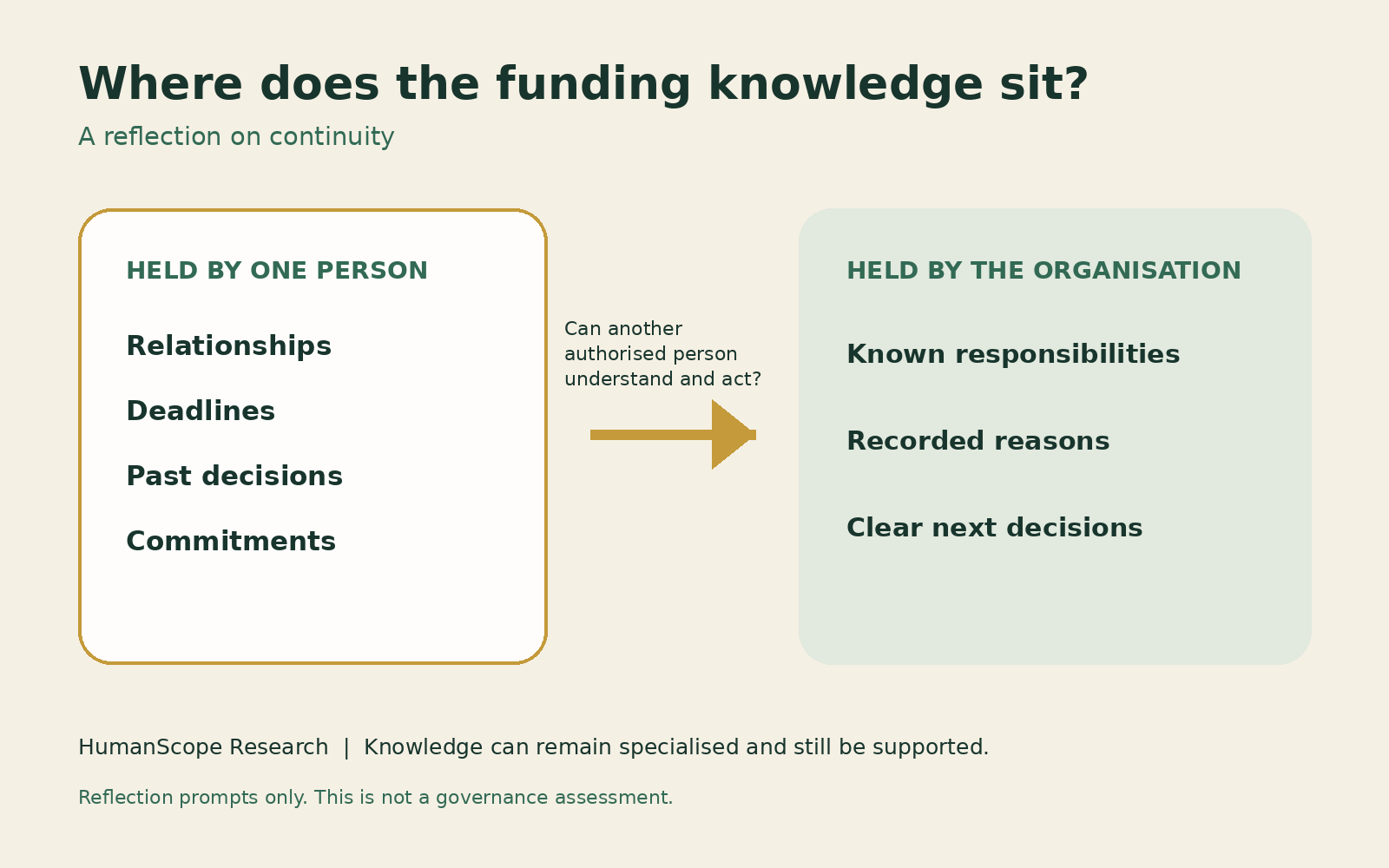
One person knows which funder prefers a phone call. They remember why an application was changed two years ago. They know where the final report sits, which deadline is flexible and which promise must not be forgotten.
Their knowledge keeps the work moving. It may also reveal a quiet vulnerability.
If that person were unavailable tomorrow, what would the organisation still know?
The invisible funding role
Imagine a small community trust where the coordinator has managed funding for several years. This is an illustrative example, not a client story. The board sees the applications and approves the budgets. The coordinator carries everything around them: conversations, reminders, past decisions and the reasons behind them.
When the coordinator takes unexpected leave, nobody has done anything wrong. Yet the next deadline becomes difficult to interpret. The board can find the submitted form, but not the conversation that shaped it. A colleague knows a report is due, but not what the funder expects to hear about.
The issue is not simply where a document was saved. It is whether the organisation can understand and continue the funding work without relying on one person’s memory.

Funding knowledge is part of governance
Charities Services says governance includes setting long term direction, making decisions that support a charity’s purpose and overseeing how money and assets are used. Its June 2026 guidance also says well governed charities base decisions on reliable information, manage risks early and keep clear and accurate records.
That guidance applies to governance broadly. Our reflection is that funding knowledge deserves to be viewed through the same lens. A board does not need to write every application, but it should be able to understand important commitments, risks and decisions.
Read Charities Services guidance on governance
Shared does not mean public
Some funding information is sensitive. Sharing responsibility does not mean opening every conversation to everyone. It means deciding who needs enough context to act responsibly, and how the organisation protects both confidentiality and continuity.
In the imagined trust, the coordinator may remain the lead. Another authorised person could still understand upcoming commitments and the board could retain the reasons behind major decisions. The aim is not to remove expertise. It is to make sure the organisation can support it.
What gets lost between applications?
Funding knowledge includes more than a list of open grants. It may include why an opportunity was declined, which programme costs were difficult to explain, what evidence a funder requested and what the organisation promised to deliver.
When those details disappear, a new person may unknowingly repeat an unsuitable request or make a commitment that conflicts with earlier work. They may also spend precious time rediscovering what the organisation had already learned.
Charities Services states that officers are responsible for financial sustainability and for ensuring funds and assets advance charitable purposes. That responsibility does not require every officer to become a funding specialist. It does support having enough reliable information to make informed decisions.
Read Charities Services guidance on financial management
A useful question for the next board conversation
Consider one current funding relationship. Who understands the purpose of the request, the obligations attached to it and the next decision the organisation may need to make? Is that understanding held by the organisation, or only by a person?
The answer may show that the current arrangement works well. It may reveal one conversation that is overdue. Either way, continuity begins with seeing where the knowledge sits.
HumanScope supports funding research and sustainability work that connects opportunities with organisational purpose, evidence and practical capacity. If your team is reconsidering how funding work is held, we welcome an enquiry about your priorities.
Register your interest in funding support
HumanScope Research. Understanding people. Strengthening impact.
Images are conceptual editorial illustrations. The infographic presents reflection questions, not a governance assessment. Sources checked 7 October 2026.