RESEARCH AND COMMUNITY VOICES · By HumanScope Research
An overall result can be useful. It offers a clear summary and helps a team see a broad pattern.
It can also make different experiences look more alike than they are.
A programme may be welcoming for many people and difficult to access for others. One group may find the pace helpful while another feels left behind. The summary is not necessarily wrong. It may simply be too wide to show where the differences sit.
Before we ask what the result says, do we know whose experiences it brings together?
One programme does not create one experience
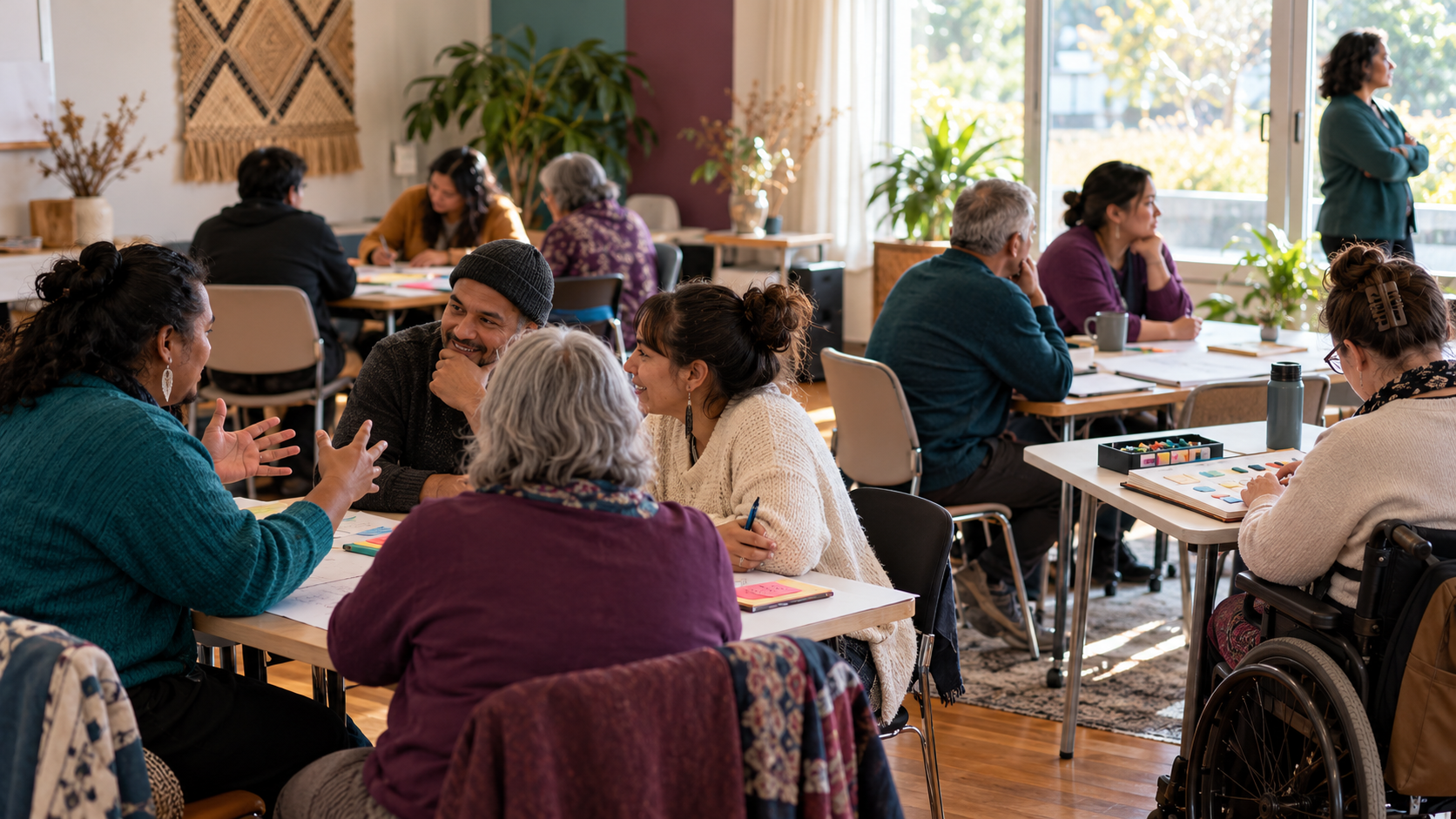
Imagine a community workshop with several small groups taking part. This is an illustrative example, not a client story. The same facilitator, activities and venue are available to everyone.
Some participants enjoy speaking in a group. Others contribute more when there is time to reflect. A few people find the written materials easy to use. Someone else needs the information explained in a different way.
When the team looks at the overall feedback, the workshop appears positive. That finding matters. It still does not tell the team whether the programme worked in the same way for everyone.
The overall picture is not the whole picture
A summary can help an organisation communicate clearly. The difficulty begins when clarity is mistaken for completeness.
The Department of the Prime Minister and Cabinet says good evaluation should measure the impact a policy has made and for whom. Its guidance asks whether outcomes improved for the general public, a particular population group or people from a particular area.
Read the Department of the Prime Minister and Cabinet guidance on evidence and evaluation

Differences can matter before they look dramatic
In the illustrative workshop, the team may notice that one group attends regularly but speaks less during discussion. Another group reports a good experience but rarely returns. A third group describes a barrier that is invisible in the overall summary.
None of these observations proves why the difference exists. They show where another question may be needed.
Looking more closely does not require treating every variation as a problem. It means resisting the assumption that an overall result speaks equally well for everyone included within it.
Ask what the average cannot answer
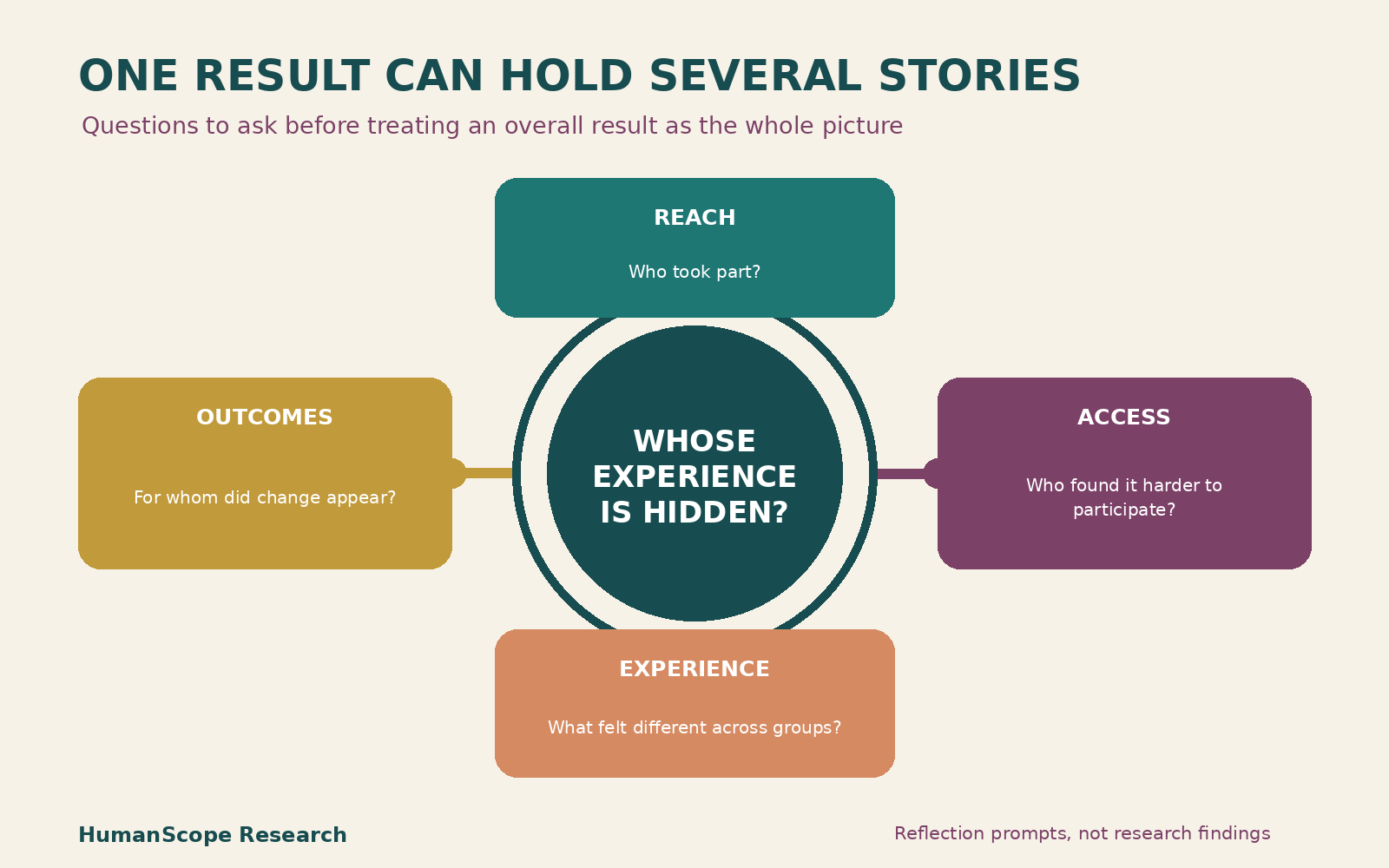
Who took part in the activity? Who found it harder to participate? Did different groups describe the experience in different ways? For whom did meaningful change appear, and whose outcomes remain uncertain?
These questions do not automatically produce a better conclusion. They help reveal the limits of the conclusion already available.
The DPMC guide to using evidence recommends a structured approach and attention to the limits of evidence. It also highlights different cultural values and knowledge systems, and the importance of being transparent about how evidence has been considered.
Read the Department of the Prime Minister and Cabinet guide to using evidence
A fuller picture may be less tidy
The overall result may remain useful after these questions are asked. The organisation may simply describe it with more care. Instead of saying the programme worked for everyone, it may say what was observed, whose experiences were represented and what still needs to be understood.
That wording may feel less simple. It can also be more honest and more useful for the next decision.
HumanScope supports community research, evaluation and outcomes work that helps organisations understand broad patterns alongside the experiences within them. If your team wants a clearer picture of who a programme is working for, we welcome an enquiry.
Register your interest in research and outcomes support
HumanScope Research. Understanding people. Strengthening impact.
Images are conceptual documentary visuals. The infographic presents reflection prompts, not research findings. Sources checked 9 October 2026.